
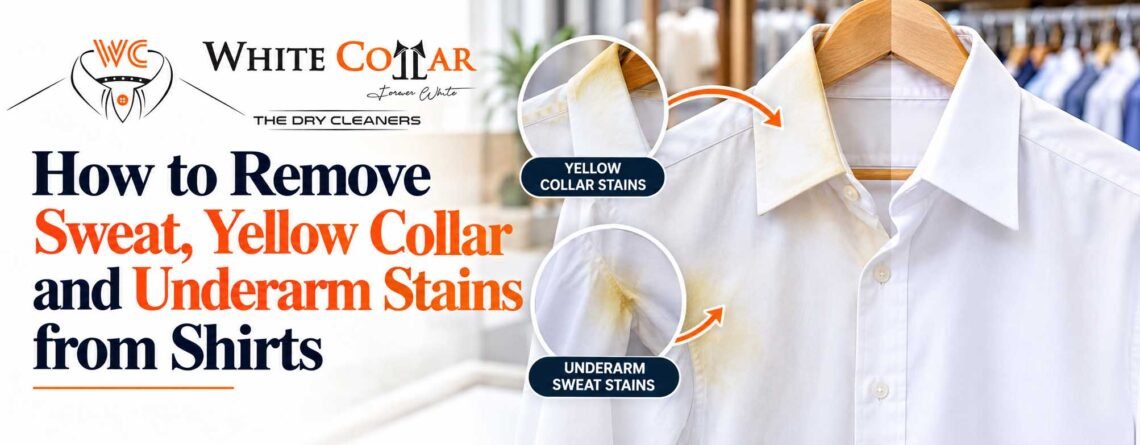
How to Remove Sweat, Yellow Collar and Underarm Stains from Shirts
Sweat stains, yellow shirt collars and underarm marks are common problems, especially if you wear formal shirts regularly. White shirts may develop yellow patches, while coloured shirts can show dark marks around the collar, cuffs and underarms.
These stains can become difficult to remove when sweat, body oils, deodorant residue and detergent build up in the fabric. Using the wrong cleaning product or rubbing too hard can make the problem worse.
The good news is that many fresh stains can be treated at home with the right approach. In this guide, we explain how to remove sweat stains from shirts, clean yellow collars and underarm marks, and protect your clothes from unnecessary damage.
What Causes Yellow Collar and Underarm Stains?
Before removing a stain, it helps to understand why it develops.
- Sweat and Body Oils
Sweat contains water, salts and other substances. Body oils also transfer onto shirt collars and underarms. Over time, these residues can collect in the fibres and contribute to discolouration.
- Deodorant and Antiperspirant Residue
Some antiperspirants contain aluminium compounds that can react with sweat and residue on clothing. This can contribute to stubborn yellow marks, particularly under the arms.
- Dirt Around the Collar
Your shirt collar repeatedly comes into contact with the skin, hair products, facial oils and dust. These substances can create a grey or yellowish ring around the neckline.
- Incorrect Washing or Storage
Using unsuitable detergents, washing at the wrong temperature or storing a shirt before it is completely clean and dry can contribute to persistent marks and unpleasant odours.
- Heat and Previous Cleaning Attempts
Heat from ironing or drying can make some stains harder to remove. If a mark remains after washing, check it before ironing or putting the shirt in a dryer.
How to Remove Yellow Stains from a Shirt Collar
Yellow collar stains often need targeted treatment before washing. Always check the garment’s care label and test any cleaning product on a hidden area first.
Step 1: Inspect the Fabric
Check whether your shirt is made from cotton, polyester, silk or a blend. Cotton shirts may tolerate different treatments from delicate fabrics such as silk.
If the shirt is expensive, embellished or labelled for professional cleaning only, avoid experimenting with home remedies.
Step 2: Apply a Suitable Laundry Detergent
For washable cotton and similar fabrics, apply a small amount of liquid laundry detergent to the stained collar according to the product instructions.
Gently work it into the fabric with your fingertips or a soft cloth. Avoid vigorous scrubbing, which can damage fibres or affect the collar’s finish.
Step 3: Allow Time for Treatment
Leave the detergent on for the period recommended on its packaging. Do not allow the product to dry on the fabric unless its instructions specifically permit this.
Step 4: Wash According to the Care Label
Wash the shirt using a suitable detergent and the temperature recommended on the care label. Do not assume that hot water is always better for stain removal.
Step 5: Inspect Before Drying
Check the collar in good light after washing. If the stain remains, repeat an appropriate treatment if the fabric permits it.
Avoid ironing or tumble-drying the stained area until you are satisfied with the result.
How to Remove Sweat Stains from Shirt Underarms
Underarm stains can contain a combination of sweat, body oils and deodorant residue. Their removal depends on the fabric, the age of the stain and any previous treatment.
For Washable Cotton Shirts
- Check the care label to confirm that the shirt is machine-washable or suitable for handwashing.
- Apply a suitable liquid laundry detergent to the affected area.
- Gently work the detergent into the fabric without stretching or damaging it.
- Allow the product to work according to its instructions.
- Wash the shirt using the recommended settings.
- Inspect the underarm area before drying.
If the yellow mark remains, consider a fabric-compatible oxygen-based laundry stain remover, following its label instructions. Check colourfastness first, particularly on coloured shirts.
For Polyester and Blended Shirts
Synthetic fibres may retain oily residue and can respond differently to stain treatments.
Use a detergent suitable for the fabric and follow the garment’s care label. Avoid excessive heat and harsh scrubbing, which may damage the fibres or affect the finish.
For Silk and Delicate Shirts
Silk and other delicate fabrics require greater care. Avoid applying strong stain removers, bleach or acidic home remedies without confirming that they are suitable.
If the care label recommends professional cleaning, or if the shirt is valuable, consult a professional cleaner before treating the stain.
How to Remove Deodorant Marks from Shirts
Deodorant marks may appear as white streaks on dark shirts or yellowish patches on lighter garments.
For washable shirts, try the following:
- Brush away loose residue gently with a clean, soft cloth.
- Apply a suitable laundry detergent if the fabric allows it.
- Wash according to the care label.
- Check the garment before drying or ironing.
For fresh white marks on a dark shirt, gently dabbing with a clean, slightly damp cloth may help remove surface residue. Test first to ensure that the fabric does not lose colour or develop water marks.
Avoid aggressive rubbing, which can spread the residue or cause visible wear.
Can Baking Soda, Vinegar or Lemon Remove Yellow Shirt Stains?
Home remedies are frequently recommended for yellow collar and underarm stains, but they are not suitable for every fabric or every stain.
| Product | Important consideration |
| Baking soda | Can be abrasive when rubbed into fabric and may not remove every type of stain |
| White vinegar | Acidity may affect some dyes, finishes and delicate materials |
| Lemon juice | Can affect colours and may cause discolouration, particularly with sunlight exposure |
| Oxygen-based stain remover | May be suitable for some washable garments when used exactly as directed |
| Chlorine bleach | Can damage or discolour certain fabrics and should not be used unless the garment and product instructions permit it |
For most washable everyday shirts, a suitable laundry detergent and careful pre-treatment are a sensible first choice.
Never mix cleaning products. In particular, do not mix chlorine bleach with vinegar, acids, ammonia or other cleaners, as dangerous gases or reactions may occur.
Common Mistakes to Avoid When Treating Shirt Stains
Even with the right product, incorrect treatment can make a stain harder to manage.
Rubbing the Stain Too Hard
Aggressive rubbing can damage the fibres and cause the affected area to look worn or faded.
Using Hot Water Without Checking the Label
High temperatures are not suitable for every fabric or stain. Follow the garment’s care instructions and the stain remover’s directions.
Applying Bleach Without Testing
Chlorine bleach can damage coloured garments and may weaken some fibres. Do not assume that it is safe for white shirts without checking the fabric and product instructions.
Ironing Over a Remaining Stain
Heat may make certain stains more difficult to remove. Inspect the shirt after washing and before ironing.
Repeatedly Using Strong Home Remedies
Combining or repeatedly applying different substances may damage the fabric. If a stain persists, stop experimenting and seek professional advice.
How to Prevent Yellow Collar and Underarm Stains
Prevention is often easier than removing an old stain.
- Wash washable shirts regularly, especially after heavy perspiration.
- Treat collar and underarm marks before washing when practical.
- Allow deodorant or antiperspirant to dry before putting on a shirt.
- Use the correct amount of detergent.
- Follow the care label for washing and drying.
- Avoid storing damp or soiled shirts in closed wardrobes.
- Check for remaining stains before ironing.
- Rotate your formal shirts to reduce repeated wear of the same garment.
If you frequently wear white office shirts, inspecting the collar and underarms before putting them in the laundry can help you catch stains early.
When Should You Choose Professional Shirt Cleaning?
Some stains are difficult to remove at home, especially if they have been present for a long time or have already been exposed to heat.
Professional garment care may be worth considering when:
- Yellow stains remain after suitable washing.
- The shirt is made from silk or another delicate fabric.
- The garment is expensive, designer-made or difficult to replace.
- Previous stain treatments have not worked.
- The collar or underarm area shows signs of colour change or fabric damage.
A professional cleaner can assess the garment, identify the likely stain type and recommend an appropriate treatment. However, complete removal cannot be guaranteed, particularly for old stains or permanent fibre discolouration.
Professional Garment Care in Delhi
If you wear formal shirts for work, meetings or special occasions, proper cleaning helps maintain their appearance and freshness.
White Collar Forever provides garment-care services in Delhi. If you have stubborn yellow collars, underarm stains or marks on delicate shirts, check the available services and discuss the fabric and stain history before treatment.
Visit White Collar Forever to explore professional garment-care options.
Frequently Asked Questions
How do I remove yellow stains from a white shirt collar?
For a washable shirt, apply a suitable liquid laundry detergent to the collar, follow the product instructions and wash according to the care label. Inspect the stain before drying. Persistent marks may require a fabric-compatible stain remover or professional assessment.
Why do white shirts turn yellow under the arms?
Yellow underarm marks can develop when sweat, body oils and antiperspirant residue accumulate in the fabric. Washing habits, the garment’s material and previous heat exposure can also affect the result.
Can old sweat stains be removed from shirts?
Some old sweat stains can be improved with suitable pre-treatment, but results depend on the stain, fabric and previous cleaning. Permanent colour changes or damaged fibres may not be reversible.
Is baking soda safe for removing underarm stains?
Not for every fabric. Baking soda can be abrasive when rubbed into fibres, so a suitable laundry detergent is often a better starting point for washable shirts. Always test any treatment first.
Should I use bleach on yellow shirt stains?
Only if the garment’s care label and the bleach manufacturer’s instructions explicitly permit it. Chlorine bleach can damage some fibres and cause unwanted colour changes. Never mix bleach with vinegar or other cleaning products.
How can I prevent yellow stains on white office shirts?
Wash shirts regularly, pre-treat affected areas when appropriate, allow deodorant to dry before dressing and avoid ironing over remaining stains. Follow the garment’s care instructions.
Final Thoughts
Yellow shirt collars and underarm sweat stains can be frustrating, but the right treatment depends on the fabric and the type of residue. Start with a suitable laundry detergent for washable shirts, avoid harsh scrubbing and check for remaining marks before drying or ironing.
For delicate garments, persistent stains or expensive formal shirts, professional garment-care advice can help you choose an appropriate cleaning method while reducing the risk of fabric damage.











Leave a Reply